
Start Minnesota Court Records Online
Minnesota Court Records Online (MCRO) is the free statewide starting point for many public District Court cases and selected documents. It includes District Court locations in all 87 counties. Coverage remains limited by case type, public-access rules, document availability, retention, age, and digitization. MCRO cannot certify a copy, accept a filing, schedule a hearing, pay a fine, or perform a Bureau of Criminal Apprehension background check. Use the complete case or citation number whenever possible. For a name search, try the exact name, variants with and without a middle name, the wildcard after at least two characters, and the Sounds Like option.
Before searching Minnesota court records, gather the party's name as used when the case was filed, an approximate year, the case category, and the likely county. A case number is the strongest key. Minnesota case numbers commonly contain a location code, a two-letter class such as CV, CR, TR, FA, PR, JV, or CO, the filing year, and a sequence. Preserve every hyphen and leading zero, and omit spaces. A location prefix should not be guessed from a county name. It is an operational code printed on the actual record.
- Open MCRO and choose Case, Document, Hearing, or Judgment Search based on the needed result.
- Enter the exact case number, or search by name statewide before narrowing the court location.
- Review identity, category, filing county, status, parties, and events instead of relying on a name alone.
- Use a courthouse MNPAC terminal when remote MCRO does not show a public electronic item.
- Ask the filing county's District Court Administration for paper, archived, certified, exemplified, or unavailable material.
The Minnesota Data Practices Office explains access to executive-branch and local government data. Its role differs from Judicial Branch access, but the official resource helps identify the correct records custodian.
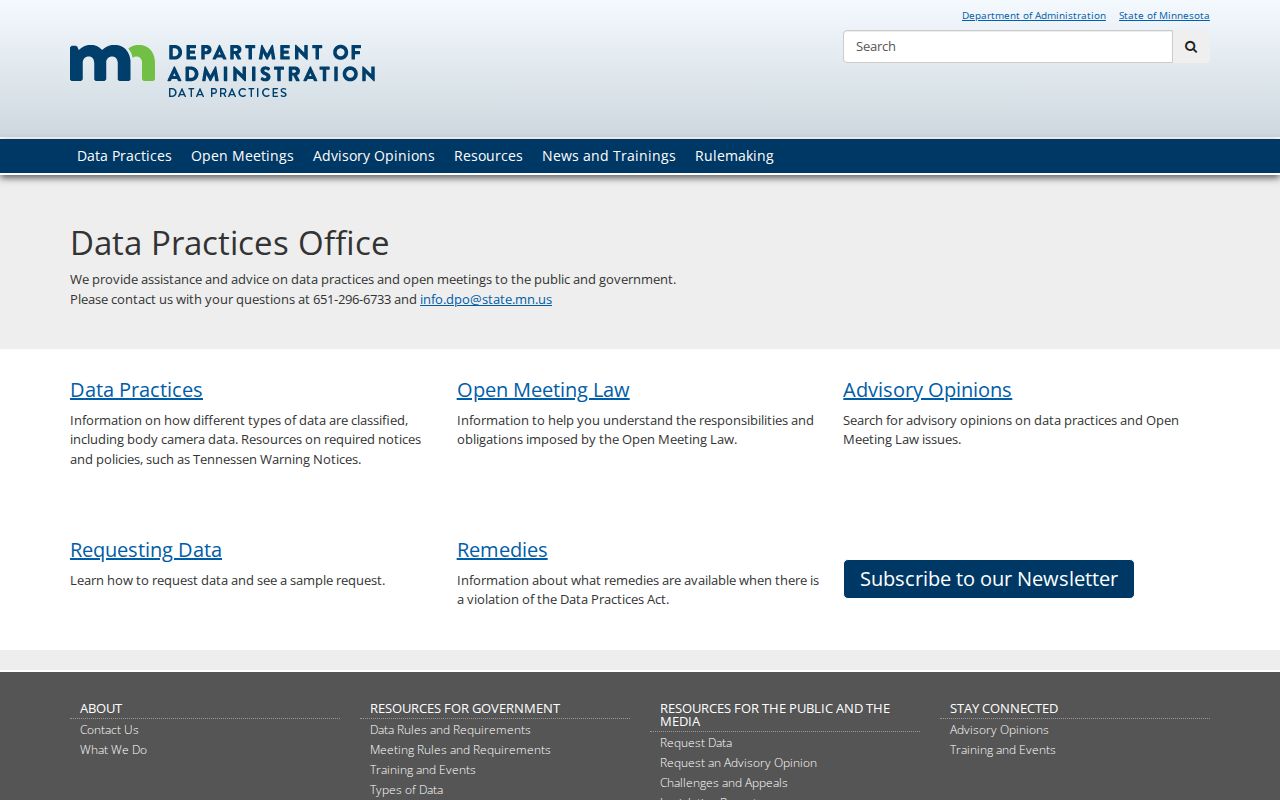
Judicial case records principally follow court access rules, while sheriff, police, and other executive data generally follow Chapter 13 procedures.
Minnesota Court Records Search Fields
MCRO separates its tools because a case summary, a PDF, a hearing, and a money judgment answer different questions. Case Search supplies case details and the register of actions. Document Search is useful when the case number and desired filing are known. Hearing Search focuses on date, type, court location, and judicial officer. Judgment Search covers qualifying public docketed monetary judgments, not every fine, restitution order, probate claim, or family judgment.
| Field Label | Type | Required | Notes / Format |
|---|---|---|---|
| Search mode | Tab | Yes | Case, Document, Hearing, or Judgment Search |
| Case number | Text | For number search | Letters, numbers, and hyphens; no spaces |
| Last or business name | Text | For name search | Exact spelling unless wildcard or Sounds Like is used |
| First and middle name | Text | Conditional | Repeat searches with middle name included and omitted |
| Court location | Selector | Yes or default | Search statewide or select a Minnesota court location |
| Case category and status | Selector | No | Useful filters, but keep broad when uncertain |
| Citation or attorney identifier | Text | Alternative | Useful when pending criminal name access is blocked |
| Date range or judicial officer | Date/selector | Mode-dependent | Used mainly for hearing and document searches |
A pending criminal case does not appear through a defendant-name Case or Hearing Search until a qualifying conviction. Dismissed and continued-for-dismissal matters remain subject to that remote restriction. Search by case number, citation number, attorney name, or bar number instead. A missing name result is not proof that no case exists.
Note: MCRO name matching is exact, so spelling variants and lawful identity checks matter when several people share a name.
Types of Minnesota Court Records
Minnesota District Court is the state's only ordinary trial-court tier. It creates civil, criminal, family, juvenile, probate, housing, traffic, ordinance, protective-order, and conciliation records. Conciliation Court is the small-claims division. Probate, Family, Juvenile, Criminal, and Civil labels describe divisions or case classifications, not separate constitutional court systems. Housing Court is a specialized calendar in Hennepin and Ramsey, while eviction cases elsewhere remain District Court matters. The same unified structure means the filing county's Court Administration is the court-file custodian across these categories.
The Minnesota Supreme Court and the single statewide Minnesota Court of Appeals produce separate appellate dockets. Their records may include briefs, motions, orders, opinions, counsel, and event histories. The notice of appeal and trial-level events can remain visible in the District Court record, but the appellate docket must be searched separately. Federal cases are also separate from the Minnesota system.
- Civil and conciliation: complaints, answers, service, motions, orders, judgments, satisfactions, claims, and removal papers.
- Criminal and traffic: complaints or citations, appearances, pleas, motions, dispositions, sentences, fines, and compliance events.
- Family and protective matters: petitions, temporary orders, decrees, custody or support orders, and later motions, with sensitive data restricted.
- Probate and protected-person cases: petitions, appointment papers, wills, notices, inventories, accounts, letters, orders, and closing records where public.
- Juvenile, adoption, and commitment: District Court matters subject to much tighter access and confidentiality rules.
Note: A case category helps route the search, but access still depends on the document, party status, and governing rule.
What Minnesota Court Records Show
A public Minnesota case-detail screen can identify the file, parties, attorneys, court location, judge, event history, hearings, disposition, and linked public documents. Criminal matters can add count number, statute, level, offense date, plea, sentence, probation, and restitution data. Civil results can include judgment creditor, debtor, docketing, and satisfaction entries. A status such as closed does not resolve every issue. One count may be dismissed while another ends in conviction, a civil judgment may remain unpaid, or a closed file may later reopen.
| Field | What It Shows |
|---|---|
| Case number and title | Unique file identifier and caption; preserve exact punctuation and role names. |
| Court location and category | Filing county, District Court location, and class such as civil, criminal, family, traffic, probate, or conciliation. |
| Filing date and status | When the court opened the file and its current procedural state, not necessarily the event date. |
| Parties and counsel | Plaintiff, defendant, petitioner, respondent, and attorneys or bar numbers where public. |
| Register of actions | Chronological record of filings, hearings, orders, continuances, judgment, closure, and later activity. |
| Disposition | How each claim or count ended, including dismissal, plea, conviction, acquittal, judgment, or another result. |
| Hearings and judicial officer | Scheduled date, type, location or remote label, and assigned judge when public. |
| Public documents | PDF links for remotely accessible filings; an entry without a link may still be public at the courthouse. |
Read dates in context. Filing is not the same as service, incident, signed-order, entry, docketing, or sentence-completion date. An online financial figure may not be a current payoff because interest and later payments can change it. Court Administration remains the source for an up-to-date balance and formal certification.
Minnesota Court Records Access Rules
The Minnesota Rules of Public Access to Records of the Judicial Branch govern court case and administrative records. They distinguish public records, records unavailable remotely, courthouse-only access, and confidential material. The Minnesota Government Data Practices Act more broadly governs executive and local government data, including many police and sheriff records. Sending a request under the wrong regime can lead to a referral even when part of the requested information is public.
Public remote access can be narrower than counter access. MNPAC terminals at District Court courthouses show a fuller electronic public view than MCRO. Locally stored paper, exhibits, archives, and certified copies remain with the filing county. Ask for a page count, copy type, delivery cost, and itemized total. Minnesota's statutory civil first-paper amount is only one component; local law-library and authorized surcharges can alter the filing-counter total. A free online PDF is not a certified copy.
The official District Court fee statute shows the statewide legal basis for court charges.
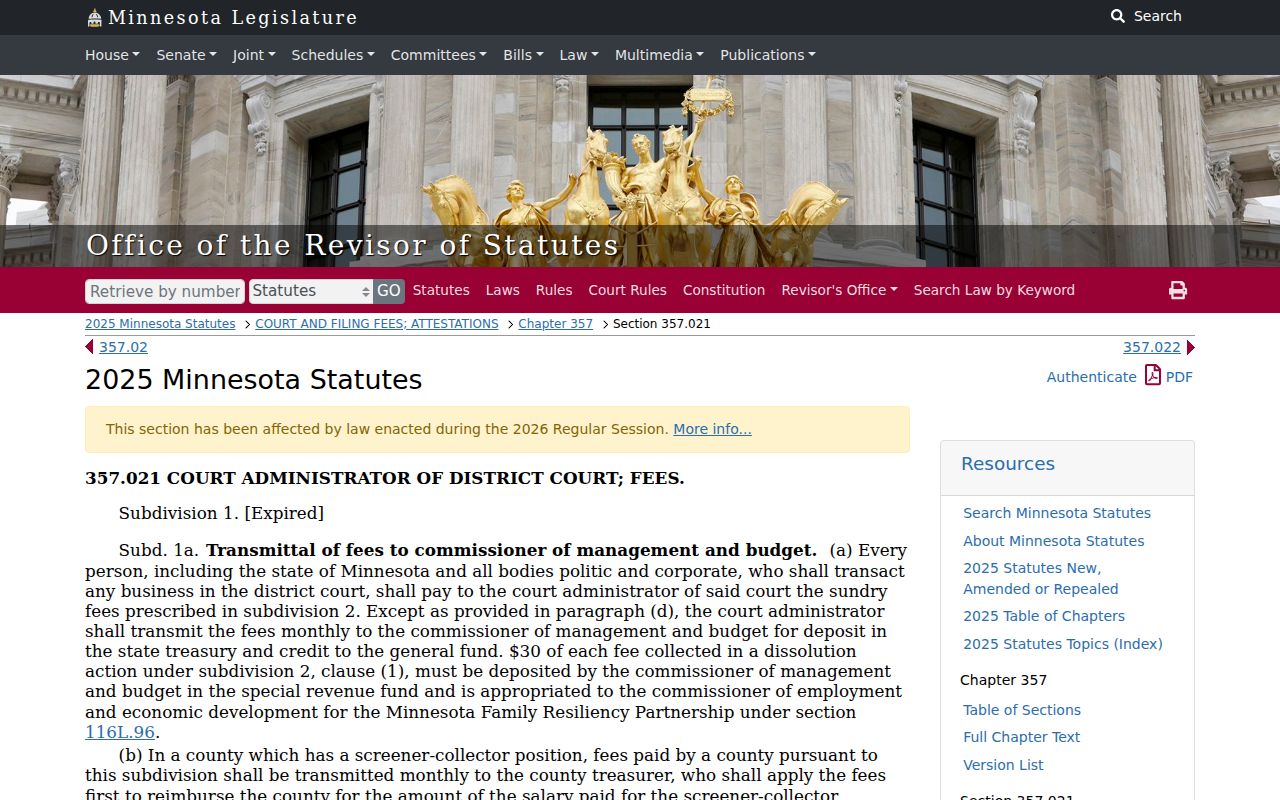
The statute should be read with the filing county's current schedule because the final amount can include other authorized charges.
Note: A public docket entry does not guarantee that its attached paper can be downloaded remotely or released without redaction.
Restricted Minnesota Court Records
Juvenile, adoption, civil commitment, medical, child-protection, confidential-address, and protected minor or victim information receive special treatment. Social Security numbers, financial account numbers, juror data, and confidential forms are withheld or redacted. A case category can exist while particular documents remain restricted. Parties seeking their own file may need identity or relationship proof, a secured channel, counsel, or a court order. Public access does not authorize bypassing those controls.
Expungement can involve automatic sealing, petition-based sealing, or records already private by law. A petition generally goes to the District Court county where the case was resolved and follows Minn. Stat. §609A.03. Eligibility and waiting periods depend on disposition and offense. The petition must accurately identify the case and affected agencies. An order limits ordinary disclosure according to its terms, but it does not necessarily destroy every record or bar all authorized criminal-justice access.
For federal opinions and contributed docket material, CourtListener can provide a free secondary access path.
Federal records do not appear reliably in MCRO, and an official or certified federal copy must still come through PACER or the federal clerk.
Find Minnesota Court Records Offices
Use the Minnesota county directory to identify the filing location, then contact that county's District Court Administration. Minnesota does not divide ordinary case files between an elected county clerk and a district clerk. The unified Court Administrator structure covers criminal, civil, family, juvenile, probate, conciliation, housing, and traffic court files. The county still matters for local paper, exhibits, archive retrieval, certification, correction, payment method, and delivery.
Ask for the exact document rather than every record on a person. Supply the complete case number, party names, filing county, approximate year, document title, docket date, desired attachments, and plain, certified, or exemplified copy type. A transcript follows the court reporter or transcription process and is not simply a clerk photocopy. If a case was transferred, ask both locations which office holds the requested exhibit or final certified document.
Tip: Save the case number and the date checked before contacting Court Administration about a missing or inaccurate Minnesota record.